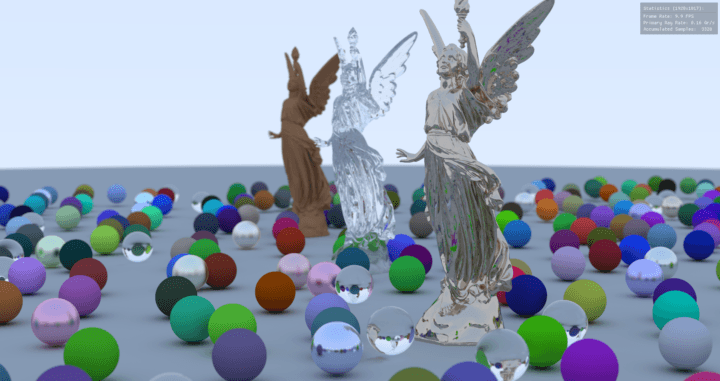
Evidence at a Glance
RTX 3080 at 1920×1080 using 12 rays per pixel and 16 bounces.
A real-time progressive result rather than an offline final frame.
Interactive scene controls expose the quality and performance trade-off.
Overview
Ithildin, Sindarin for starlight, is a real-time ray tracer built with Vulkan's ray-tracing pipeline and inspired by Peter Shirley's Ray Tracing in One Weekend series. The goal was to translate the books' approachable path-tracing ideas into an explicit GPU implementation rather than reproduce the original CPU renderer.
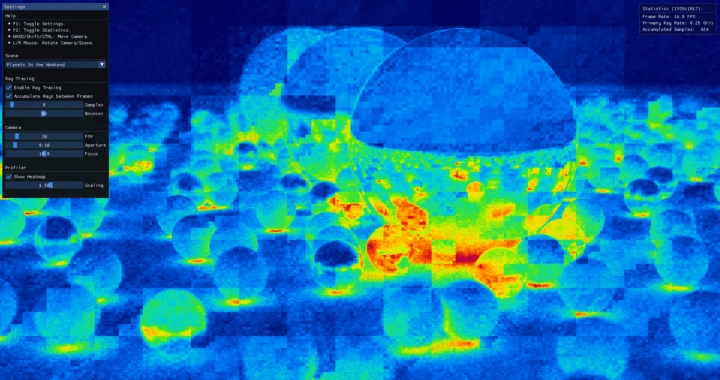
The renderer includes an interactive ImGui control surface for sample count, bounce depth, camera behavior, and scene parameters. Acceleration structures and GPU ray tracing keep canonical scenes interactive while progressive accumulation makes convergence and motion-related noise visible in real time.
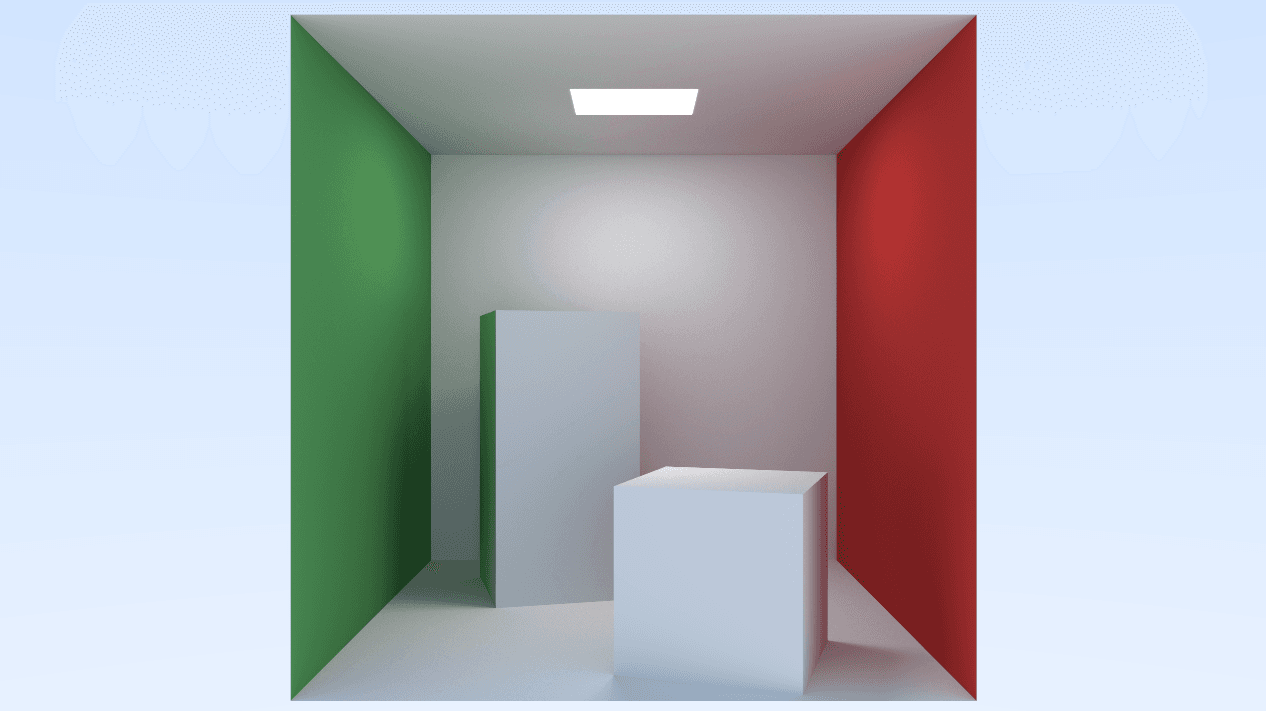
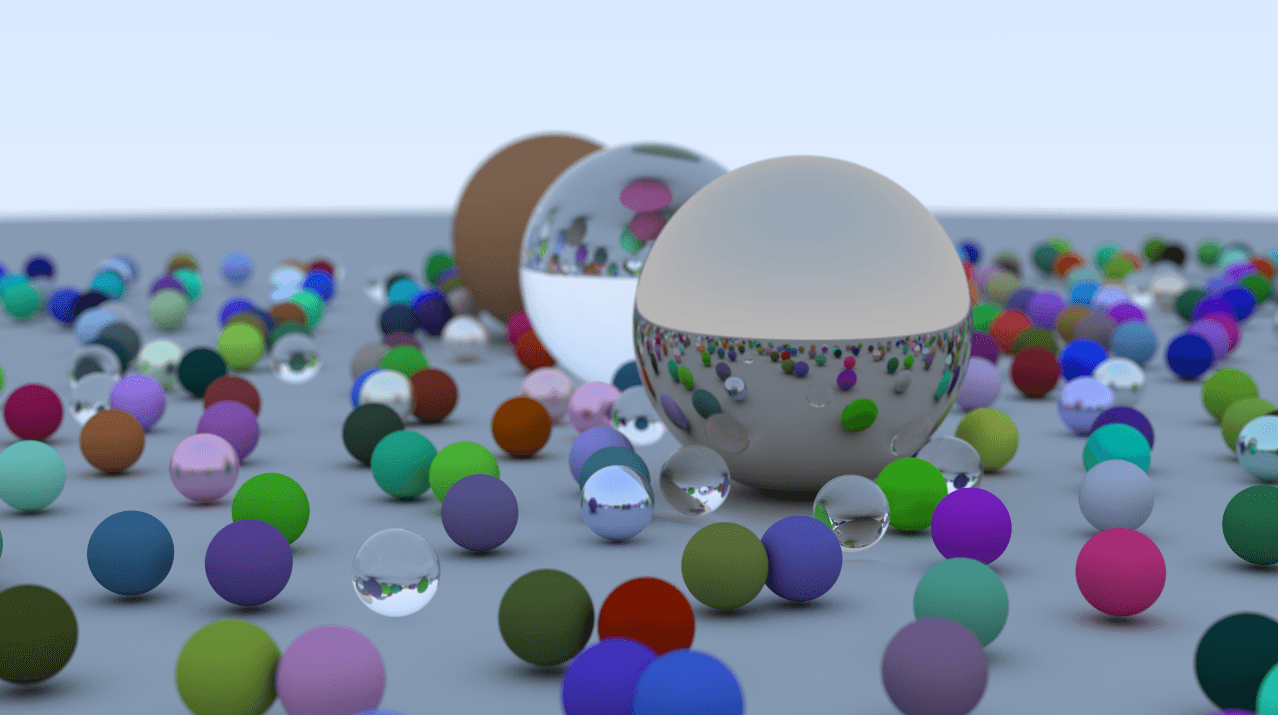
The project includes Cornell-box, random-sphere, world, and heat-map views, giving the case study both final imagery and diagnostic evidence of how the renderer behaves.
The Challenge
Moving from a pedagogical CPU tracer to Vulkan changes the shape of the problem: resources, synchronization, shader binding, acceleration structures, and command submission all become explicit.
High sample counts improve convergence but immediately reduce interactivity. Camera movement also invalidates accumulated samples and exposes noise until the image converges again.
Key Engineering Decisions
Use Vulkan's Ray-Tracing Pipeline
Hardware traversal and shader stages provide a real-time path while preserving explicit control over scene resources and dispatch.
Expose Quality Controls Live
Sample count, bounce depth, and camera parameters can be changed at runtime so performance and convergence trade-offs are observable.
Use Acceleration Structures for Traversal
Bounding and acceleration structures move scene intersection away from brute-force geometry testing.
Show Diagnostics Beside Beauty Renders
Heat maps and multiple reference scenes make performance behavior and implementation progress visible rather than relying on one final screenshot.
What I Owned
Results
Gallery
Valuable Lessons
Real-time ray tracing is as much about resource lifetime and accumulation strategy as intersection mathematics.
A benchmark is most credible when hardware, resolution, rays, and bounce depth travel with the frame-rate number.